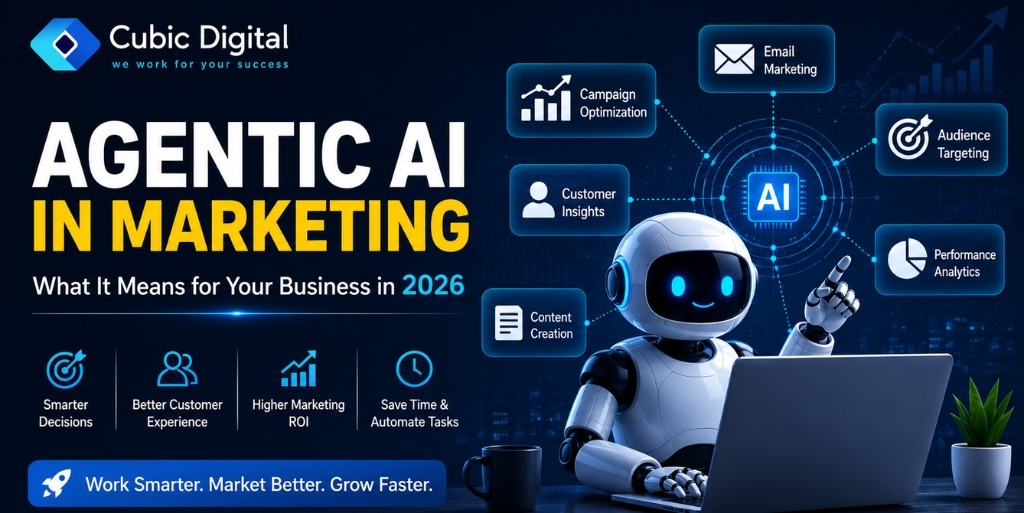

Marketing teams are under more pressure than ever to produce more content, reach more people, and show faster results. AI tools have made a lot of that possible. You can now generate content ideas in minutes, pull detailed audience reports overnight, and run automated email sequences that once required a dedicated team.
But here is where a lot of businesses go wrong. They assume that because AI can do more, it should eventually replace the creative side of marketing altogether. That is where the results start to suffer.
After working with businesses across a range of industries, we have seen what happens when brands go all-in on automation without human judgment. The output looks fine at a glance. The content gets published. But something feels off. The brand voice gets flat. Campaigns stop connecting. Audiences notice, even if they cannot say exactly why.
The real question was never AI or humans. It is how to use both well.
What AI Actually Does Well in Marketing
AI is a genuinely useful tool when you are clear about what it is built for. It processes data quickly, finds patterns across large volumes of information, and handles repetitive tasks without errors or fatigue. For any marketing team managing multiple channels, that kind of support matters.
In practice, AI is being used for:
- Keyword research and search trend analysis
- Audience segmentation and targeting
- Email personalization based on user behavior
- Social media scheduling and publishing
- Campaign performance tracking and reporting
- Customer support through chat automation
The real value is speed and scale. Work that once took days now takes hours. When it comes to reading data and identifying what is and is not working, AI is genuinely hard to beat.
Where Human Creativity Cannot Be Replaced
Data tells you what happened. It does not tell you why people care. That space between the numbers and the audience is where human creativity does its work. When a brand needs to build a real identity, tell a story that sticks, or write something that makes a customer feel genuinely understood, no AI tool is going to get there in the same way.
Think about the campaigns you actually remember. The ones that made you feel something, or introduced you to a brand in a way that felt fresh and different. Those were built on human judgment, cultural awareness, and real creative thinking, not on predictive models trained on existing content.
- Ideas that have no precedent in existing data
- Understanding the emotional context behind a customer’s decision
- Maintaining a brand voice that feels personal and consistent over time
- Strategic thinking that goes beyond what the metrics are showing
- Recognizing when something is technically correct but still wrong for the brand
This is not a sentimental argument. It is a practical one. Brands that rely too heavily on AI-generated content often see engagement drop over time because audiences pick up on the difference, even when they cannot put words to it.
AI vs. Human Creativity: A Direct Comparison
| Factor | AI | Human Creativity |
|---|---|---|
| Speed | Very Fast | Moderate |
| Data Analysis | Excellent | Limited |
| Emotional Understanding | Limited | Strong |
| Original Ideas | Based on Existing Data | Highly Creative |
| Brand Storytelling | Weak | Strong |
| Strategic Thinking | Data Focused | Vision Focused |
Neither column is a complete marketing strategy on its own. That is the whole point.
Can AI Replace Human Creativity?
No, and that is not an opinion unique to creative teams. It is where the marketing industry broadly stands right now.
AI generates content by predicting what should come next based on patterns in existing data. That means it can produce output that sounds reasonable and well-structured, but it does not have the ability to truly surprise, resonate emotionally, or understand the nuance of a specific brand the way a person who has worked with that brand can.
There is also a consistency problem that tends to show up over time. Without human oversight, AI content can start recycling the same angles, defaulting to the same phrases, and slowly eroding the distinct voice a brand has spent years building. That said, human creativity alone has real limits too.
AI Works From Old Data. Humans Work From Today
There is one limitation of AI that does not get enough attention in marketing conversations: it only knows what it was trained on.
Every AI tool has a knowledge cutoff. After that point, the world keeps moving. Platforms update, tools get renamed, algorithms shift, and strategies that worked six months ago may no longer apply. But the AI keeps answering questions as if nothing changed.
A perfect example: on April 11, 2026, Google officially announced that Looker Studio is being renamed back to Data Studio. The rebrand comes with a bigger strategic shift, positioning Data Studio as the central hub for Google Data Cloud assets, from reports to BigQuery conversational agents to Colab-built data apps. At the same time, Looker stays as the enterprise BI platform for larger organizations.
If you asked an AI tool about this today, there is a real chance it would give you the old information. It simply does not have access to announcements made after its training cutoff.
Now think about how this plays out in real marketing work. You rely on AI to guide your reporting setup, your tool recommendations, or your client documentation, and you end up sharing outdated information with confidence. That is a credibility problem.
A marketer who stays current, reads industry news, and follows platform updates catches things like this immediately. And the more experience someone has in digital marketing, the better they are at pushing back on AI outputs, cross-checking what has changed, and making sure the final work reflects reality, not an outdated snapshot of it.
That human layer of verification is not optional. It is what keeps AI from becoming a liability.
Why Ignoring AI is also a mistake
If your team is still doing keyword research by hand, building every report from scratch, and managing every repetitive task manually, that time is coming out of somewhere. Usually it comes out of the creative work, the strategy, and the actual value your team is capable of delivering.
Without AI as part of the process:
- Research takes longer
- Data analysis becomes difficult
- Campaign optimization is slower
- Personalization becomes harder at scale
Marketing moves quickly. Waiting a week to understand whether something is working is too long. AI closes that gap and gives your team better information to act on.
The Approach That Actually Works
The businesses getting the strongest results right now are not choosing between AI and human creativity. They are putting each one where it belongs.
A simple way to think about the split:
Use AI For:
- Research, data gathering, and trend analysis
- Audience segmentation and behavioral insights
- Repetitive and time-consuming operational tasks
- Campaign tracking and performance reporting
Use your team for:
- Writing, creative direction, and brand voice
- Campaign strategy and messaging
- Storytelling and long-form content
- Client relationships and strategic decisions
When your team is not spending time on tasks that a tool can handle, the quality of their creative work improves. And so do the results.
How Cubic Digital Approaches This
At Cubic Digital, we do not treat AI as a shortcut. We use it to handle the analytical and operational work more efficiently so our team can spend more time on what actually requires skill: building campaigns that connect with real people, writing content that sounds like a real brand, and making strategic decisions that align with a client’s actual business goals.
We work with businesses in Ahmedabad and beyond across:
- Search Engine Optimization
- Content Marketing
- Social Media Marketing
- Pay Per Click Advertising
- Website Design and Development
- Performance Marketing
If you want marketing that uses smart tools without losing the human quality that makes campaigns work, our team is here to help. Call us at +91 79 4005 8027.
Conclusion
AI is not the future of marketing on its own. Neither is ignoring it. The brands that will perform best over the next few years are the ones figuring out how to pair data-driven tools with genuine creative thinking.
Speed without substance does not build brand loyalty. Creativity without data often misses the mark. Together, they give you both. And that combination is what separates marketing that looks busy from marketing that actually works.