Social media can help a business build visibility, strengthen customer relationships, generate leads, and support long-term growth. But there is a major difference between being active on social media and having a strategy that actually supports business goals.
Posting whenever there is time, chasing trends without context, or using every available platform can create activity without meaningful results. A strong social media strategy gives every post, campaign, and interaction a clear purpose.
Capturing even a share of today’s crowded social media attention requires more than frequent posting. It requires a clear strategy, valuable content, meaningful engagement, data-driven decision-making, and continuous optimization.
That is what Cubic Digital provides to small businesses through our social media marketing services, helping businesses build a stronger online presence, connect with the right audience, generate opportunities, and achieve sustainable growth through a strategic approach to social media.
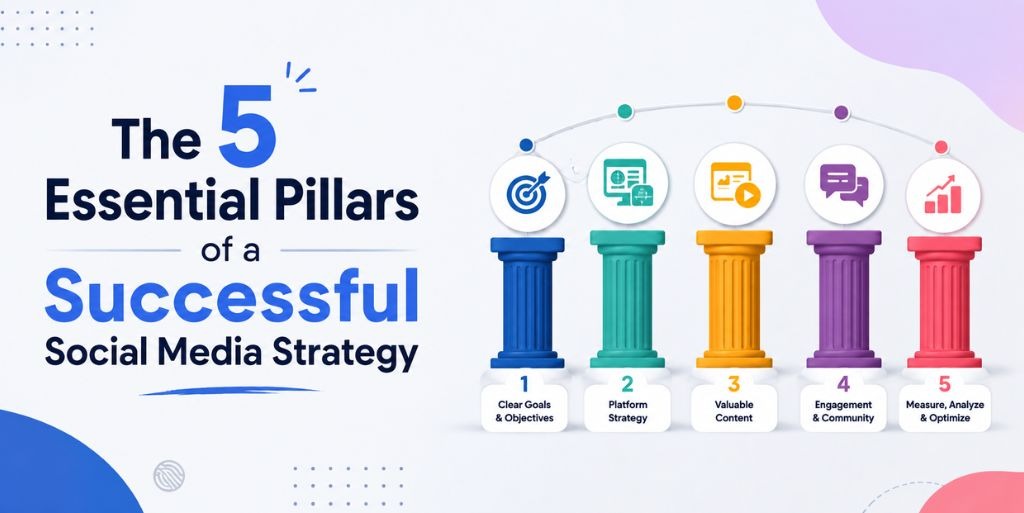
Pillar 1: Clear Goals and Audience
A strong strategy starts with knowing what you want social media to achieve. Simply saying “get more followers” is not enough because follower growth does not always lead to business growth.
Start with one or two clear goals, such as:
- Increase qualified website visits by 20 percent over three months
- Generate more qualified inquiries through social media over time.
- Increase meaningful comments and shares on educational posts
- Build awareness for a new service among a specific audience
Next, define who you want to reach. Look at customer needs, common questions, buying concerns, interests, and the platforms they already use.
Audience research can include website analytics, customer conversations, search queries, social media comments, and competitor reviews. The more clearly you understand your audience, the easier it becomes to create content that feels relevant.
Pillar 2: Platform Strategy
Being active on every social platform can spread your time and resources too thin. A better approach is to choose platforms based on your audience, business goals, and content strengths.
For example, a business that relies heavily on visual content may benefit from Instagram, while a company targeting professional decision makers may focus more on LinkedIn. A brand with useful video tutorials may find YouTube valuable for long term discovery.
Before choosing a platform, ask:
| Question | What to check |
|---|---|
| Is my audience there? | Audience age, interests, and habits |
| Does the format suit my content? | Video, images, text, or long form content |
| Can I stay consistent? | Time, skills, and available resources |
| Does it support my goal? | Awareness, traffic, leads, or sales |
Choose two or three platforms where you can provide real value instead of trying to maintain a weak presence everywhere.
Pillar 3: Valuable and Consistent Content
Content is the part of your strategy that your audience sees most often. It should answer real questions, solve problems, show expertise, and give people a reason to remember your brand.
Build a few clear content pillars around topics that connect audience needs with your business expertise. A digital marketing brand, for example, might focus on SEO tips, website improvements, social media planning, case examples, and common marketing mistakes.
Mix different formats to keep your content useful and easy to consume:
- Short educational posts
- How to videos
- Customer stories
- Quick tips
- Behind the scenes content
- Questions and polls
- Longer guides that can be reused as social posts
Consistency matters, but it does not mean posting for the sake of posting. A useful weekly content plan is better than a busy schedule filled with repetitive updates. A well-planned content marketing service can also help turn one strong piece of content into several useful social posts.
Pillar 4: Engagement and Community Building
Social media is not simply a place to publish content. It is a place to have conversations.
If someone comments on your post, respond when the comment deserves a reply. If a customer asks a question through direct messages, provide a clear and helpful answer. Pay attention to mentions and feedback because these conversations can reveal what your audience needs next.
Good community building often comes down to simple actions:
- Reply in a natural and timely way
- Ask useful follow up questions
- Thank people who share your content
- Address complaints calmly and clearly
- Use audience questions as ideas for future content
- Join relevant conversations without forcing a sales message
The goal is not to chase likes. It is to build trust and create meaningful connections that support long term brand growth.
Pillar 5: Measurement, Testing, and Optimization
A social media strategy should improve over time. That requires more than checking follower numbers once a month.
Connect your metrics to your original goals. If your goal is website traffic, track link clicks and relevant website visits. If your goal is lead generation, measure form submissions, calls, or other actions that show genuine interest.
Useful metrics can include:
- Reach and impressions for visibility
- Comments, shares, and saves for engagement
- Link clicks for traffic
- Leads and conversions for business results
- Engagement trends for content quality
Review performance regularly and look for patterns. If educational posts receive more saves and shares than promotional posts, create more educational content. If a certain topic gets strong clicks, explore that topic from different angles.
Testing also matters. Try different headlines, formats, posting times, calls to action, and content topics. Keep what works and adjust what does not.
Conclusion
Successful social media marketing is not about posting more. It is about creating a thoughtful system where every activity has a purpose.
By building your approach around strategy, valuable content, genuine engagement, meaningful measurement, and ongoing optimization, you can create a social media presence that supports both audience relationships and business growth.
If you want to move from inconsistent posting to a more focused and measurable approach, professional guidance can help you identify opportunities, build a practical content plan, and turn insights into action.
Ready to take your social media presence to the next level? At Cubic Digital, we create data-driven strategies designed to drive powerful performance, meaningful engagement, and phenomenal growth. Let’s connect and take your brand to new heights.
Frequently Asked Questions
Q:Why is a social media strategy important for a business?
A: A strategy gives social media a clear purpose. It helps businesses reach the right audience, create relevant content, use resources efficiently, and connect social activity with measurable business objectives.
Q:How often should a business post on social media?
A: There is no universal posting frequency. The ideal schedule depends on the platform, audience, content resources, and business goals. A consistent schedule that your team can maintain is generally more useful than posting frequently without a clear purpose.
Q:Which social media platform is best for a business?
A: The best platform is where your target audience is active and where your business can consistently create useful content. Consider your audience, industry, content formats, and objectives before choosing platforms.
Q:How do you measure social media marketing success?
A: Measure metrics that relate to your objectives. These may include engagement, clicks, leads, conversions, website traffic, customer actions, and ROI rather than relying solely on follower counts or impressions.
Q:How long does it take to see results from social media marketing?
A: Results vary depending on the business, audience, objectives, resources, and strategy. Some campaigns can generate immediate engagement or traffic, while brand awareness, community growth, and consistent lead generation generally require sustained effort and testing.