Every business wants more customers, more sales, and better results from its marketing efforts. But getting people to visit your website is only the first step. The real goal is to turn those visitors into people who are interested in your products or services and are ready to take action.
This is where PPC advertising can help.
PPC, or pay-per-click advertising, allows businesses to show ads to people who are searching for their products or services online. When planned well, these ads can bring the right people to your website and help turn their interest into real business opportunities.
However, getting more clicks does not always mean getting more customers. A successful PPC campaign focuses on reaching the right audience, sharing the right message, and making it easy for visitors to take the next step.
In this blog, we will explain how PPC advertising helps businesses attract high-value customers and get better results from their advertising budget.
What is PPC Advertising and How Does it Work?
PPC advertising allows businesses to show paid ads on search engines such as Google. Advertisers generally pay when someone clicks on their ad.
For example, someone searching for a website design company may see a relevant ad in Google search results. If they click the ad, they visit the business website and may contact the company for a quote.
The process is simple:
- A person searches for a product or service.
- A relevant ad appears in the search results.
- The person clicks the ad and visits the website.
- The visitor takes an action, such as filling out a form or making a purchase.
However, not every click leads to a sale. Businesses need a clear plan to attract interested visitors and help them take the next step.
Why High Value Customers Matter More Than Clicks
Getting more clicks does not always mean getting more customers. Some visitors may only be looking for information, while others may be ready to buy.
A high-value customer brings meaningful value to your business through purchases, repeat orders, or long-term relationships.
For example, one PPC campaign may receive more clicks but generate very few customers, while another may attract fewer visitors and convert more of them into paying customers. This shows that the success of a PPC campaign is not just about getting more clicks. It is about reaching the right audience and turning interested visitors into valuable customers.
To attract valuable customers, focus on people who need your service, are genuinely interested in your offer, and are more likely to pay.
The goal is not simply to increase website traffic. It is to attract people who are more likely to choose your business.
How PPC Advertising Turns Clicks Into High-Value Customers
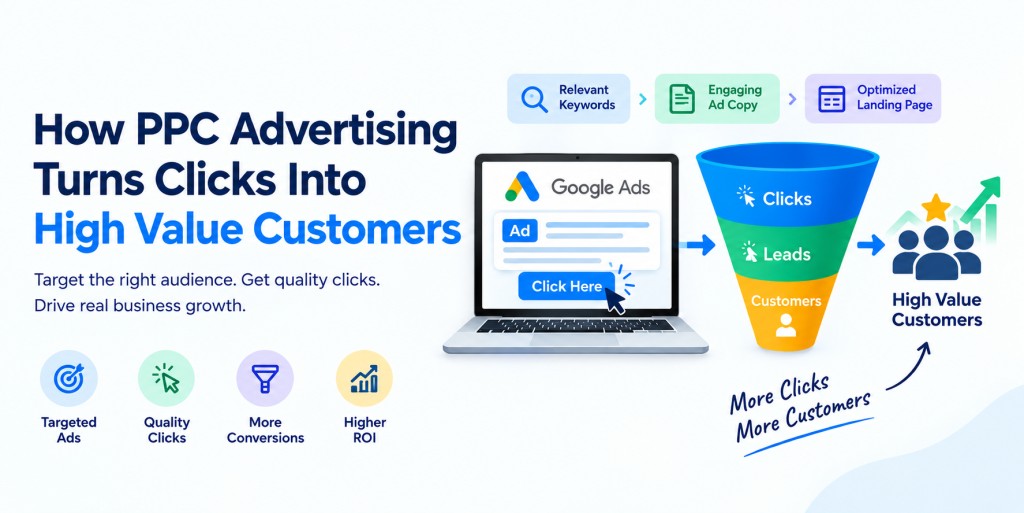
A successful PPC campaign combines the right keywords, useful ads, a good website experience, and regular improvements.
1. Choose the Right Keywords
Keywords help your ads reach people searching for relevant products or services.
For example, someone searching for “what is PPC advertising” may want to learn about the topic. Someone searching for “PPC management services” may be looking for an agency.
Both searches have value, but they show different levels of buying interest.
Choose keywords that match your services and customer needs. Review search terms regularly and add negative keywords to prevent your ads from appearing for irrelevant searches.
This helps you spend your budget on visitors who are more likely to become leads.
Choosing the right keywords is an important part of a successful PPC strategy. With professional PPC management services, businesses can improve campaign targeting and focus on attracting more relevant leads.
2. Target the Right Audience
Your ads should reach people who are most likely to need your services. PPC platforms allow businesses to target specific locations and use audience settings based on campaign goals.
For example, a local service provider can focus on people searching for its services in the areas it covers. This can reduce clicks from people who are unlikely to become customers.
Before launching a campaign, understand your target audience, their needs, their location, and the problems they want to solve. Better targeting helps your ads reach the people who matter most to your business.
3. Write Ads That Get the Right Clicks
Your ad should clearly explain what you offer and why people should consider your business.
A good PPC ad includes a relevant headline, a clear benefit, and a simple call to action.
For example, a PPC agency could use a headline such as “PPC Management Services for Growing Businesses” and invite visitors to request a consultation.
Keep your message simple and honest. Avoid promises you cannot support. The goal is to attract people genuinely interested in your services, not just get clicks from everyone who sees your ad.
4. Create a Useful Landing Page
After clicking your ad, visitors should find information that matches their search.
A landing page should explain your offer, answer common questions, and make it easy for visitors to contact you.
Here are a few ways to improve your landing page:
- Use clear headings and simple language.
- Explain the benefits of your service.
- Make the page easy to use on mobile phones.
- Add genuine reviews or trust signals where available.
- Include a clear contact form or call to action.
If your ad promotes PPC services, send visitors to a relevant service page instead of a general homepage. This creates a better experience and makes it easier for interested visitors to take action.
5. Track Results and Improve Campaigns
PPC campaigns need regular monitoring. Review which keywords generate leads, which ads attract relevant visitors, and which landing pages encourage action.
For example, if a keyword receives many clicks but generates no useful inquiries, you may need to review its relevance. If another keyword brings fewer clicks but more customers, it may deserve more attention.
A real example is Cubic Digital’s work with Clean Slip Seal Surface Solutions. In its PPC campaign case study for Clean Slip Seal Surface Solutions, the team describes how keyword research, location targeting, negative keywords, ad improvements, and ongoing campaign changes helped improve performance. The published results show that the campaign’s conversion rate reached 12.09%.
This example shows why regular campaign improvements matter. Results will vary depending on the business, market, and campaign conditions.
How to Measure PPC Success
To understand whether your campaign is delivering value, look beyond clicks and impressions. Track the actions that matter to your business.
| Metric | What it measures |
|---|---|
| Clicks | How many people clicked your ads |
| Conversion rate | The percentage of visitors who completed a desired action |
| Cost per lead | The advertising cost for each lead |
| Customer acquisition cost | The cost of gaining a paying customer |
| Return on ad spend | Revenue generated for each unit of advertising spend |
For example, if you spend ₹10,000 on ads and generate 20 leads, your cost per lead is ₹500. However, you also need to know how many of those leads became customers.
Tracking sales and leads helps you understand which campaigns are bringing real business value. It also helps you make better decisions about your advertising budget.
Common PPC Mistakes to Avoid
Even a good advertising budget can be wasted if a campaign is not managed carefully.
Some common mistakes include:
- Using broad keywords: These may attract people who are not interested in your services.
- Ignoring negative keywords: Irrelevant searches can waste your budget.
- Using unclear ad copy: Visitors may not understand what your business offers.
- Sending visitors to the wrong page: A page that does not match the ad can lead to lost opportunities.
- Ignoring conversion tracking: Without tracking, it is difficult to measure campaign success.
- Not following up with leads: Slow responses may cause interested customers to choose another business.
Regular campaign reviews can help identify these problems and improve performance over time.
Conclusion: Turn PPC Clicks Into Business Growth
PPC advertising can help your business reach people who are already searching for your products or services. However, real success comes from turning those clicks into quality leads, sales, and long-term customer relationships.
To get better results, focus on the right keywords, create relevant ads, improve your landing pages, and track the results that matter. Keep testing and improving your campaigns based on real data to make the most of your advertising budget.
With the right strategy, PPC advertising can become a valuable part of your business growth plan.
Ready to attract quality leads and get more value from your advertising budget? Contact us today to discover how Cubic Digital can help you create an effective PPC strategy that supports your business goals.